
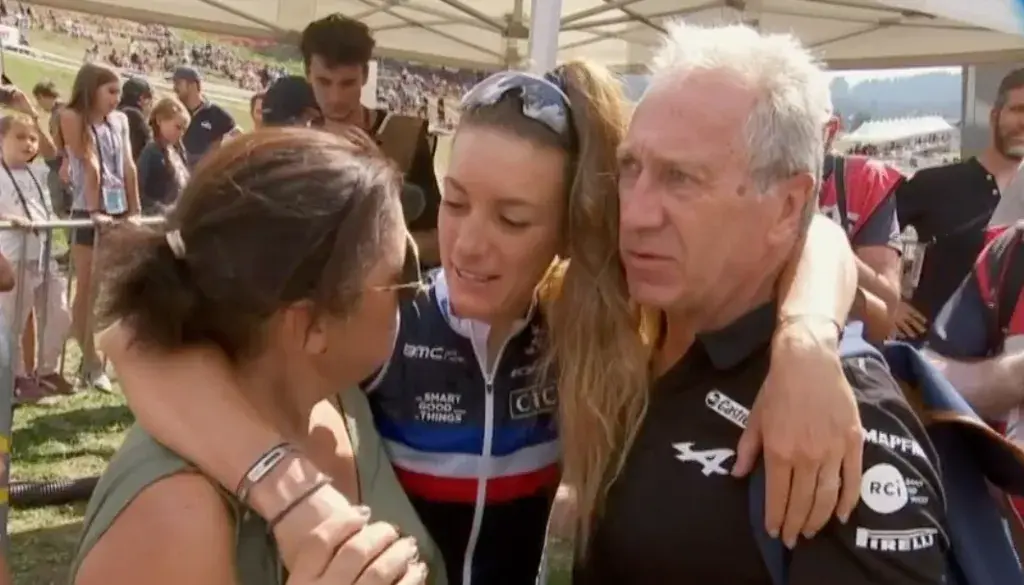
The sports world went silent when Pauline Ferrand-Prévôt burst into tears during the closing press conference of the 2026 season, her voice trembling as the cameras rolled, revealing a vulnerability rarely seen in the fiercely disciplined and globally admired champion today.
Reporters expected routine reflections on victories, injuries and future plans, but the atmosphere changed dramatically when she paused, wiped her eyes and confessed that she could no longer remain silent about a pain she had carried privately for years until now.
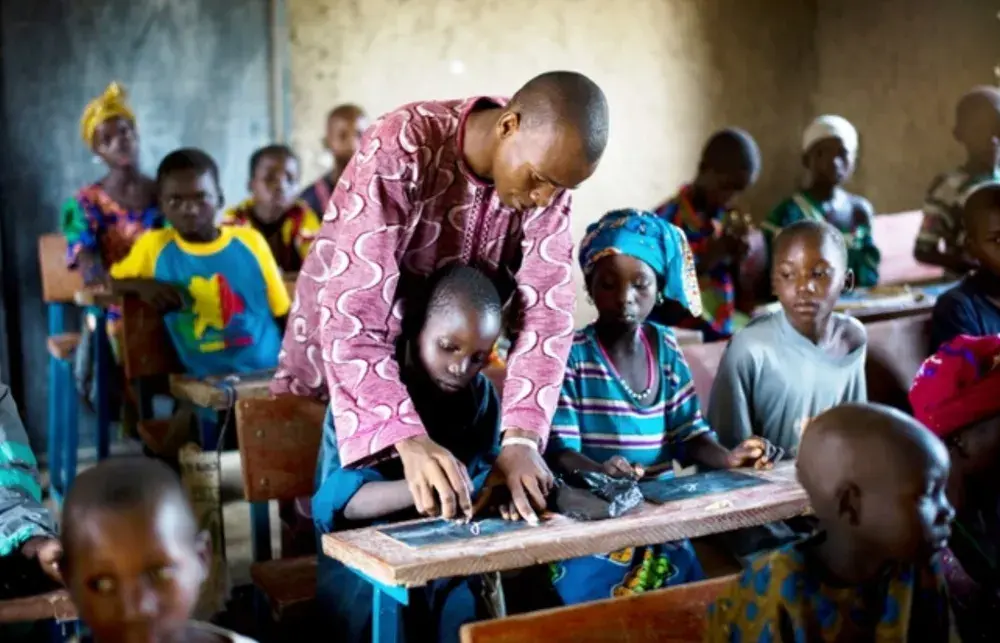
Ferrand-Prévôt then stunned the room by announcing a personal donation of twenty-five million dollars, the largest philanthropic gesture ever made by an active cyclist, entirely dedicated to improving the education, health care and protection of orphaned children across Africa today.
She explained that this commitment had been quietly honored for years by anonymous foundations, avoiding publicity to focus on the beneficiaries and not herself, a choice reflecting values shaped long before fame, medals, endorsements or global recognition defined her extraordinary career.
What turned admiration into collective shock was her next revelation, delivered through sobs, that this unprecedented gift was inseparable from a devastating family tragedy that she had hidden from her teammates, fans, sponsors and even close friends throughout her rise alone.
According to her moving account, the loss involved a young relative whose life was cut short by a poverty-related illness, an experience that exposed her to inequality and gave her the promise that she would one day use her platform to avoid suffering.
She described years of internal conflict, racing at the highest level while carrying invisible grief, channeling anguish into training, discipline and victories, all while feeling haunted every time she encountered children whose eyes reflected memories she struggled to escape during moments of competition.
Her teammates later admitted that they had felt her intensity but never imagined its source, interpreting her relentless focus as pure ambition, unaware that it was fueled by memory and a wish forged in loss, quietly shaping every decision she made beyond running alone.
The announcement immediately sparked global reactions, with athletes, charities and fans praising both the scale of the donation and the courage required to reveal such personal pain, transforming a routine seasonal event into a moment of human reckoning shared around the world.
Social media was flooded with messages of solidarity, while organizations working with African orphans reported an increase in attention, donations and volunteer interest, evidence that his revelation not only opened hearts, but mobilized resources well beyond the initial twenty-five million dollars.
Ferrand-Prévôt emphasized that transparency was now important because silence seemed complicit, explaining that she wanted young athletes to understand that success does not erase pain and that recognizing vulnerability can coexist with excellence, resilience and uncompromising competitive strength in today’s professional sport.
His federation issued a statement of support shortly after, praising his leadership beyond the medals and confirming logistical assistance to ensure funds reached credible partners, strengthening accountability, long-term impact and sustainable programs rather than short-lived token gestures on a global scale.
Analysts have noted the rarity of such candor in elite sport, where narratives favor invincibility, suggesting its disclosure could recalibrate expectations, encouraging institutions to prioritize mental health, empathy and social responsibility, alongside performance metrics and commercial success for future generations around the world.
For Ferrand-Prévôt, however, the moment was less about legacy and more about honoring memory, insisting that the donation was just a beginning, not an endpoint, to an involvement she intends to maintain personally through visits, advocacy and continued monitoring over the years to come.
She concluded the talk by apologizing for her tears and then rejecting the apology, saying that emotion was evidence of love, sorrow and responsibility, urging listeners to act rather than comment and reminding them that silence often sustains injustice more effectively than cruelty.
As she left the stage, the applause was unusually long, not celebratory but respectful, marking the recognition that greatness can be measured by generosity and honesty, and that champions sometimes win more profoundly when they expose their wounds instead of hiding them publicly.
Commentators have speculated that this revelation could redefine her final years of competition, easing pressure while deepening her purpose, as she balances ambition and service, turning victories into tools of change rather than endpoints of personal validation within the sport and society at large today.
Experts warned against romanticizing pain, emphasizing that its story should spark systemic solutions to poverty and health care, ensuring that individual generosity complements, not replaces, government responsibility and sustainable international cooperation for vulnerable children in regions affected by inequality in the world today.
Yet few would dispute the catalytic power of his honesty, which cut through cynicism and reminded audiences why sport is culturally important, serving as a bridge between spectacle and substance, competition and compassion, excellence and ethical obligation in today’s contemporary global public discourse.
As night fell, highlights of the conference circulated around the world, with many viewers admitting to watching it repeatedly, struck not by the statistics but by the sincerity, realizing that the most shocking detail was not the amount donated, but the years of quiet determination behind it that were quietly going on.
For the African orphanages designated as recipients, planning began immediately, with administrators emphasizing that the funds would expand schooling, nutrition, trauma care and safe housing, while creating local jobs to ensure dignity and continuity within surrounding communities for children and caregivers.
Asked if this revelation marked the end, Ferrand-Prévôt shook his head, explaining that grief evolves rather than ends, but that action transforms its weight, allowing memory to fuel hope, responsibility and measurable improvement in lives once overshadowed by poverty and systemic indifference.
By the end of the season, his message extended beyond the podiums and rankings, inspiring audiences to reconsider their impact, to listen when champions speak softly through tears, and to recognize that courage sometimes begins with saying, simply, enough to the injustice everywhere in silence.
By revealing her secret, Pauline Ferrand-Prévôt did not shake her legend; she deepened it, proving that the most lasting victories are those that uplift others, confront suffering honestly, and convert private grief into the collective possibility of change through compassion alone.