

The tennis world was shocked by the statements of Alexandra Eala, who broke down in tears while publicly denouncing an experience she described as humiliating, stating that the tournament left a deep emotional mark and a feeling of institutional abandonment.
According to her testimony, Eala stated that she felt violated in an environment that should have been professional and safe, noting that she never imagined experiencing such a situation in a country considered advanced, which increased her frustration, fear, and personal disappointment.
The young tennis player explained that the events occurred before the match, when, allegedly, her rival Tereza Valentová confronted her in the locker room, using offensive and humiliating language that left her in a state of shock minutes before competing.
According to Eala, the words used by Valentová were not only insulting, but included expressions that she described as terrifying, severely affecting her emotional stability and concentration prior to the official tournament match.
The situation, according to the complainant, worsened when her opponent allegedly hinted at threats related to her personal safety while she was abroad, generating a fear that transcended sports and touched on deeply human aspects.
Alexandra confessed that, after that episode, she went onto the court without the necessary mental clarity, feeling intimidated, insecure and emotionally exhausted, which prevented her from displaying her true level and competing on equal sporting conditions.
“I couldn’t play at my best,” he said between sobs, making it clear that the psychological impact was decisive in his performance, while his story began to spread rapidly among players, fans and specialized media.
Images of Eala crying sparked a wave of reactions on social media, where numerous supporters showed their support, demanded an immediate investigation, and questioned the protection protocols for young athletes in international competitions.
Meanwhile, according to witnesses, Tereza Valentová reacted with visible discomfort to the statements, even shouting at him to be quiet and stop talking nonsense, a gesture that further fueled the controversy.
That tense moment was etched in the memory of those who witnessed the scene, reinforcing the perception of a conflict that had already gone beyond sporting limits and was becoming a serious disciplinary problem.
The tournament authorities initially remained silent, which drew criticism for the apparent lack of immediate response to such a serious accusation related to verbal harassment and personal threats.
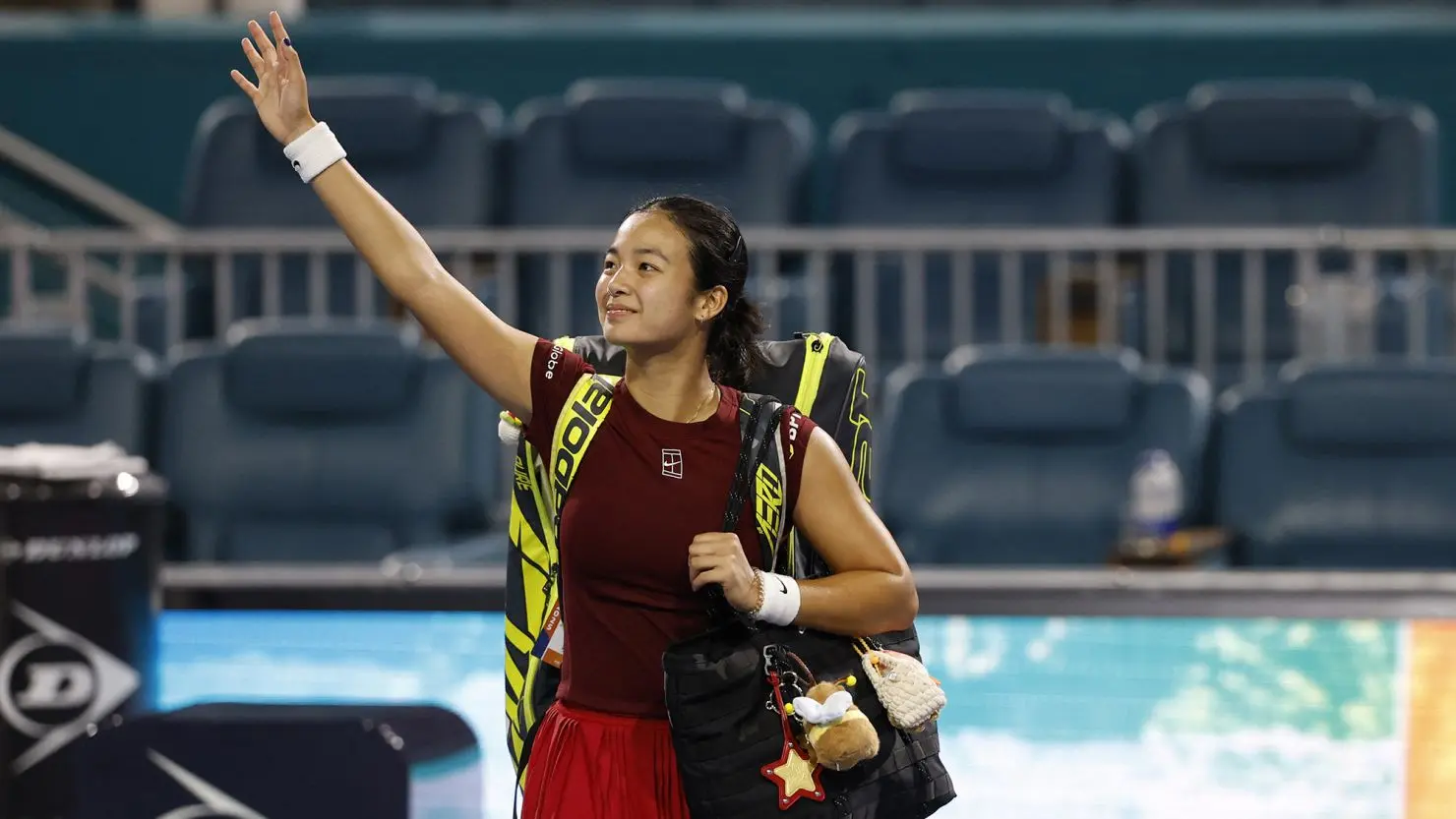
Tennis tournaments are often defined by scorelines, rankings, and breakthrough performances. But occasionally, events off the court overshadow everything that happens between the lines. That appeared to be the case when rising Filipina star Alexandra Eala became visibly emotional during a post-match media appearance, describing what she felt was deeply unfair treatment surrounding her recent match against Czech player Tereza Valentová.
Speaking through tears, Eala told reporters that she was shaken before the match even began. She alleged that a tense exchange occurred in the locker room and said the incident affected her mental readiness heading into competition. “I have evidence in my hands,” she reportedly stated, suggesting that she had documented her concerns and intended to raise them formally with tournament officials.
While tournament organizers have not publicly confirmed the details of the alleged exchange, the situation quickly became the dominant storyline of the event. Social media platforms lit up with debate, with fans expressing both support for Eala and caution about drawing conclusions before an official review.
Eala, still only in the early stages of her professional career, has long been regarded as one of the most promising players from Southeast Asia. A product of the Rafael Nadal Academy and a former junior Grand Slam champion, she has carried the hopes of Filipino tennis fans with composure well beyond her years. Her rise has been marked by resilience, discipline, and an increasingly mature on-court presence.
That is why her emotional reaction caught many observers off guard. Those who have followed her journey describe her as focused and steady under pressure. Seeing her break down during media questions suggested that whatever occurred had affected her deeply.
In professional tennis, locker rooms are shared spaces where athletes prepare mentally and physically for competition. While rivalry is inherent in elite sport, there are established expectations of professionalism. Allegations of verbal hostility, if substantiated, would raise concerns about conduct standards within tournaments.
At the same time, sports officials emphasize that disputes between players must be handled through formal review processes rather than public speculation. Without verified findings, it remains unclear what exactly transpired or whether misunderstandings may have escalated under stress.
The Women’s Tennis Association (WTA) has clear codes of conduct regarding unsportsmanlike behavior, harassment, and intimidation. Any formal complaint would likely trigger an internal review. Such investigations typically involve statements from both players, potential witnesses, and event staff before any conclusions are reached.
The broader reaction highlights how mental preparation is as crucial as physical conditioning in tennis. Unlike team sports, players compete alone on court. Emotional equilibrium can determine the difference between victory and defeat. If a player feels unsettled or distressed before stepping onto the court, performance may suffer significantly.
Several former professionals commenting on the situation noted that high-pressure environments can amplify even minor exchanges. “Tennis is psychological warfare at times,” one analyst remarked on a sports panel discussion. “But there’s a line between competitive edge and inappropriate conduct.”
Fans in the Philippines expressed strong support for Eala, praising her courage in speaking openly about how she felt. Many pointed out that young athletes, particularly those competing internationally, may face additional cultural and emotional pressures. Competing in unfamiliar environments, often far from family support systems, can intensify vulnerability.
Meanwhile, others urged restraint. Some observers cautioned that public narratives can form quickly in the absence of verified information. In today’s digital landscape, clips and quotes spread rapidly, often detached from full context. This can complicate fair assessment of any dispute.
What remains undisputed is that the incident shifted attention away from the tennis itself. Matches that might have been analyzed for tactics and shot selection instead became secondary to questions of sportsmanship and player welfare.
Eala’s comment that she might not return to the tournament venue in the future — if accurately reported — underscores the emotional weight she felt in that moment. Athletes invest enormous effort into competing at the highest level. To feel unwelcome or distressed in a competitive setting can be profoundly discouraging.
Tournament organizers have a responsibility to ensure safe, respectful environments for all participants. At the same time, governing bodies must balance transparency with confidentiality during any investigation. Public statements are often limited while facts are being gathered.
For Eala, the coming weeks may prove significant. How she processes the experience — whether through formal channels, private dialogue, or simply moving forward — will shape the narrative. Young athletes often face defining moments not only in matches won or lost, but in how they navigate adversity.
As for Valentová, fairness requires acknowledging that allegations alone do not establish guilt. Competitive intensity can be misinterpreted, and tensions before matches are not uncommon in elite sport. Any conclusions should rest on verified evidence rather than online momentum.
Ultimately, the episode has reignited conversation about emotional wellbeing in professional tennis. Mental health, respect among competitors, and tournament accountability are increasingly central topics in the sport. Players are more willing than ever to speak openly about distress, whether related to scheduling, crowd behavior, or interpersonal conflict.
If nothing else, the situation serves as a reminder that behind every ranking and statistic is a human being — vulnerable to stress, pressure, and hurt. Whether the controversy resolves quietly or prompts broader policy reflection, it has already left a mark on this tournament.