
Tadej Pogačar’s statement resonated like a thunderclap in the peloton, revealing a deep divide within professional cycling and exposing long-suppressed tensions behind performances, contracts and carefully calibrated official speeches.
By threatening to boycott the Jumbo-Visma team if a controversial decision remained unchanged, the Slovenian champion moved the debate from the sporting field to that of governance, directly raising the question of trust between riders, teams and governing bodies.
According to his words, it would not be a simple one-off disagreement, but a structural malaise fueled by rules perceived as opaque and arbitrations influenced by interests beyond sporting logic.
This public position, rare at this level, immediately aroused contrasting reactions, some hailing an act of courage, others denouncing unacceptable pressure exerted by a star on the already fragile balance of the system.
The intervention of Eddy Merckx gave a historical and symbolic dimension to the affair, the voice of the “Cannibal” remaining one of the most respected when it comes to ethics and the heritage of professional cycling.
Supporting the concerns expressed, Merckx stressed that abuses linked to money and discreet influences are not new, but that they now seem to reach a critical threshold.
For him, the problem goes beyond individuals and teams, directly affecting the credibility of the rules supposed to guarantee the fairness of competitions and public confidence.
The accusations evoke a system where certain key decisions would be conditioned by financial power struggles, creating a feeling of injustice among runners who feel that they are not competing on equal terms.
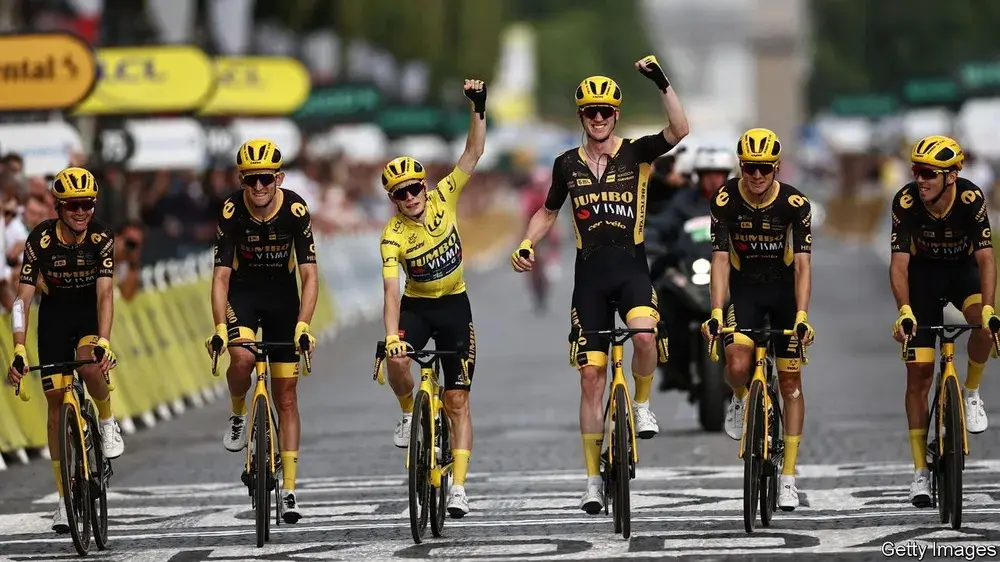
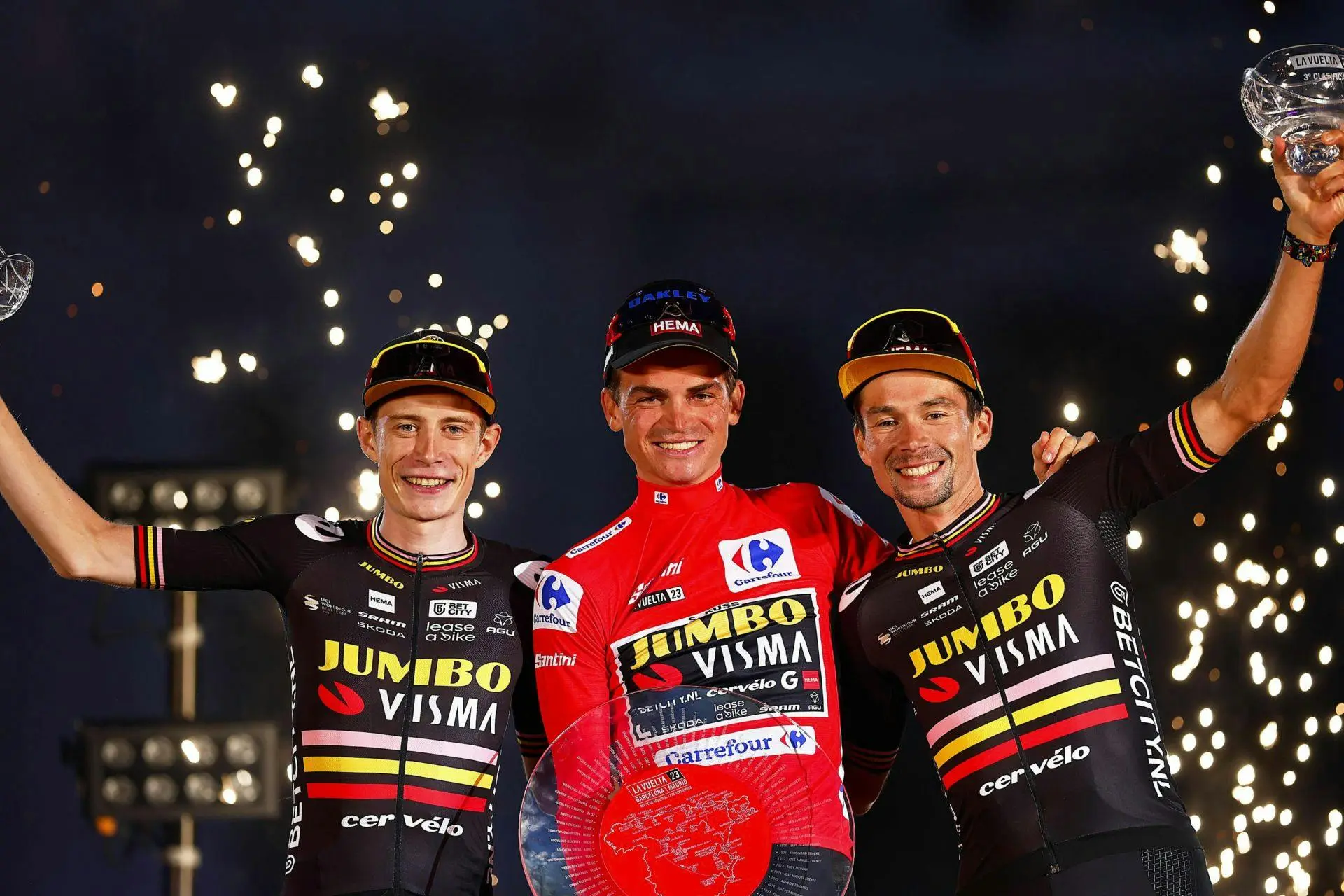
In this context, the name Jumbo-Visma appears less as an isolated target than as a symbol of a perceived imbalance, fueled by the concentration of resources, influence and sporting power.
The team’s leaders deny any irregularity, recalling their strict compliance with the regulations in force and emphasizing that their successes are the result of committed investments in performance and innovation.
However, the controversy highlights a recurring question: from what point does the economic power of a structure become a distorting factor for competition?
For many observers, the discomfort expressed by Pogačar reveals a shared feeling in the peloton, rarely expressed so openly for fear of reprisals or professional isolation.
Riders are heavily dependent on teams for their careers, making any public challenge particularly risky, even for the most high-profile champions.
This is precisely what gives this declaration particular weight, because it breaks a tacit silence maintained for years around the governance of cycling.
Faced with the media coverage of the affair, the Union Cycliste Internationale found itself under pressure, forced to respond quickly to prevent doubt from taking hold.
The UCI reiterated its commitment to transparency and fairness, while promising to examine the concerns expressed in accordance with established procedures.
However, for part of the public, these assurances are no longer enough, as trust in sporting institutions has been weakened by past scandals.
The memory of doping cases, conflicts of interest and contested decisions still weighs heavily on the image of cycling, making each controversy particularly flammable.
In this climate, the central question becomes that of reform: how to modernize governance without destabilizing an ecosystem that is already complex and highly dependent on sponsors?
Some are calling for stronger control of financial flows, clarification of the rules and more open communication on the strategic decisions taken by the authorities.
Others fear that too brutal a challenge will weaken the teams and alienate investors, essential to the survival of professional cycling.
Pogačar’s declaration thus acts as a revealer, laying bare the contradictions of a sport shared between the ideal of fairness and economic reality.
The support of a figure like Merckx reinforces the idea that the debate is not cyclical, but that it touches the very soul of cycling and its ability to project itself into the future.
For fans, the affair rekindles a deep concern: that of seeing sporting results influenced by invisible factors, undermining the emotion and credibility of victories.
The specialized media emphasize that the UCI now plays a decisive role in preserving its reputation and restoring a climate of confidence.

A reaction perceived as insufficient could encourage other runners to speak out, transforming an isolated controversy into a major institutional crisis.
Conversely, a clear and documented response could mark a turning point, opening the way to adjustments long considered necessary but postponed.
In any case, the debate now goes beyond the framework of a conflict between teams and champions, questioning the capacity of cycling to reform itself from within.
In the weeks to come, every statement will be scrutinized, every decision interpreted as a signal to the peloton and the public.
More than a personal confrontation, this affair appears to be a test of truth for a sport at a crossroads, called upon to prove that its rules are still at the service of the game.